
Are you a diagnostics laboratory?
Click here to discover our automated laboratory workflow for detecting leading gastrointestinal parasites.
Detect with precision. Treat with confidence.
Gastrointestinal (GI) parasite infections spike during warmer months
Your public swimming pool, spa or water park may be the source.

As temperatures rise, swimming pools become a popular escape from the heat. For some, a refreshing dip could lead to exposure to a debilitating gastrointestinal parasite, Cryptosporidium.
Public pools are common sources of Cryptosporidium outbreaks as infected individuals can start to spread the infection days before their symptoms appear, and also continue to spread the parasite even 2 weeks after symptoms have subsided. Alarmingly, just one infected person can shed up to 10 billion oocysts (parasite spores) in their stool daily, enough to contaminate an entire pool in a single visit. Swimmers are at risk of infection by ingesting even a tiny amount of contaminated pool water, making awareness, detection and prevention of infection essential.
What is Cryptosporidium?
Cryptosporidium is a microscopic parasite that causes diarrhoeal illness. It is transmitted through spores known as ‘oocysts’, which are shed in the stool of infected individuals.
These oocysts are protected by a thick-walled shell that allows the Cryptosporidium oocysts to withstand normal levels of chlorine and acidity found in swimming pools. As a result, Cryptosporidium can survive for many days, even in properly treated water, posing a significant infection risk to swimmers.
Time to kill or inactivate germs in chlorinated water
Note: Disinfection times are based on:
|
What are the symptoms of a Cryptosporidium parasite infection?
Symptoms can range from mild to severe, with more severe infections seen in young children, older adults, pregnant women. For those who are immunocompromised, the illness can become life-threatening.
The incubation period typically lasts around 7 days but can vary from up to 12 days before symptoms appear. Most healthy individuals recover within 3 to 7 days, though symptoms may linger for up to a month, or longer.


Cryptosporidium damages the small bowel lining and can lead to a range of symptoms including:
- profuse, watery diarrhoea
- abdominal cramping
- bloating
- nausea and vomiting
- fever
- appetite loss
- weight loss
- fatigue
Learn about how to access rapid and accurate testing for gastrointestinal infections here
Concerningly, some people may be infected with Cryptosporidium but are asymptomatic, meaning that they have no obvious symptoms of infection. However, longer-term health impacts of these asymptomatic infections have been reported. These silent infections may interfere with physical growth and cognitive development, and the impact of the infection can worsen with repeated exposure.
As Cryptosporidium can remain in a person’s stool (poop) well after symptoms have resolved, health authorities advise avoiding swimming pools, water parks, and other aquatic facilities for at least two weeks following a full recovery, to prevent further spread of the parasite.
If you or your family develop a gastrointestinal illness after swimming at a public pool, consult your doctor for medical advice.
How do I know if I am infected with Cryptosporidium?
Identifying a Cryptosporidium infection by symptoms alone can be challenging, due to shared symptoms with many other gastrointestinal infections. The only way to definitively identify a parasite infection is to test for it.
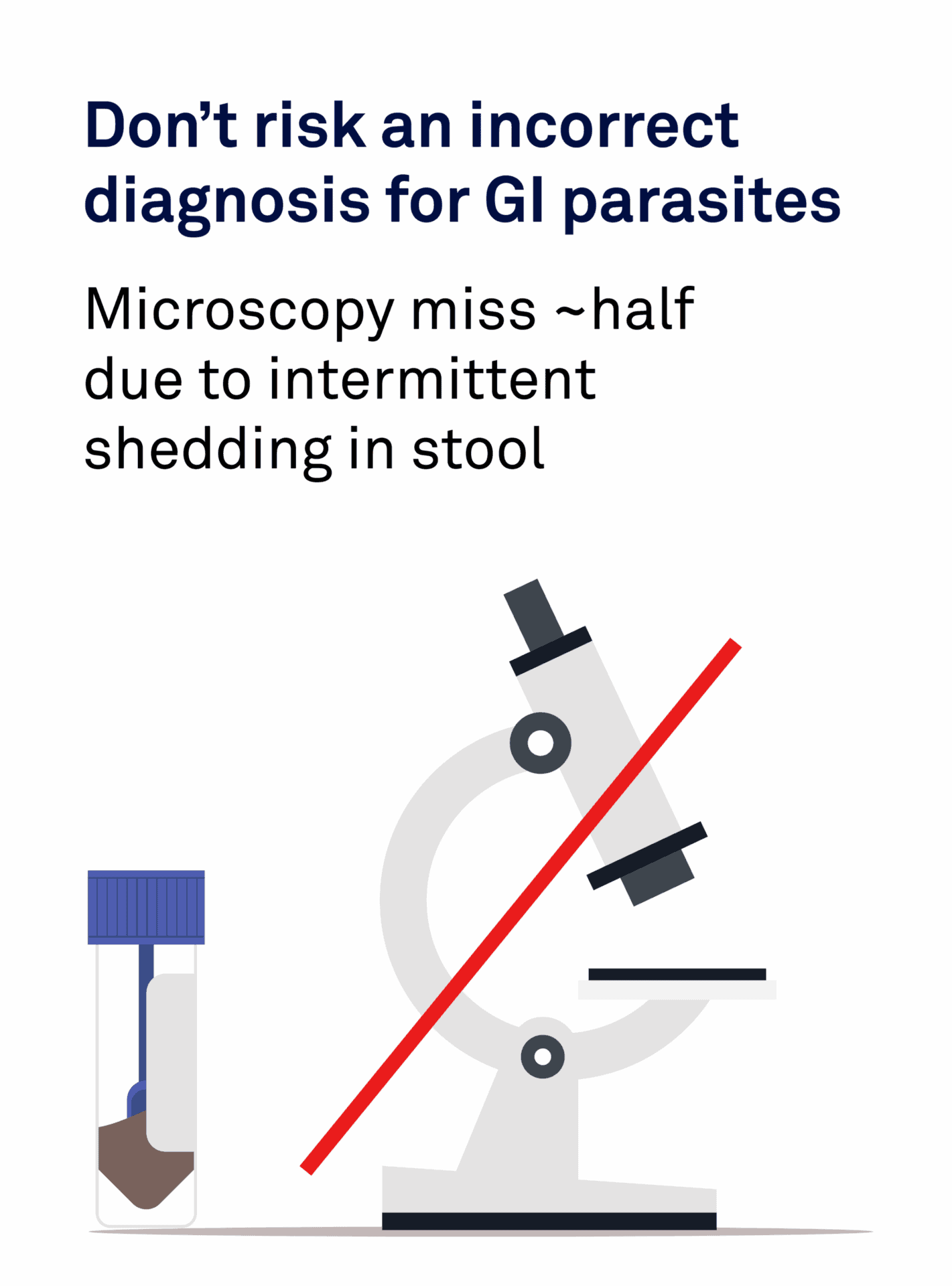
However, due to sporadic shedding of gastrointestinal parasites in stool, infections are often missed using traditional microscopic methods, with less than 50% of infections detected!
Confidence in parasite detection:
Unlike conventional methods that rely on parasite shedding to reveal infection (often needing 3 different samples across 10 days), Genetic Signatures’ advanced molecular PCR technology delivers accurate, same-day results from a single patient sample.
Genetic Signatures has a range of assays to support the detection of gastrointestinal parasites, including hard-to-detect Cryptosporidium.
- Provides faster test results and higher accuracy than conventional tests
- Backed by leading diagnostic labs and public health networks
- Designed for both higher throughput outbreak response and routine testing
Learn about how to access rapid and accurate testing for gastrointestinal infections here
Identification of these parasites allows clinicians better manage your health and reduce the chance of further spread of disease, and outbreaks.
I am a patient / clinician:
How can I access this test?
Don’t wait for symptoms to worsen. Get tested with Genetic Signatures’ advanced PCR technology. We partner with leading diagnostic laboratories around the world to provide accurate, fast and reliable results for infectious disease.
Complete the form below we’ll connect you with the nearest lab offering our cutting-edge testing solutions for gastrointestinal parasites.

I work in a diagnostic laboratory: How can I access this test?
Learn how you can employ streamlined multiplex PCR testing for a range of clinically relevant gastrointestinal parasites in a single, automated workflow with same day reporting.
Contact us to find out where you can access our test
We work in partnership with leading diagnostics laboratories around the globe.
To find your nearest parasite detection laboratory, contact us now.